GSoC Conversation Between Kunal Kushwaha and Logan Kilpatrick
Introduction
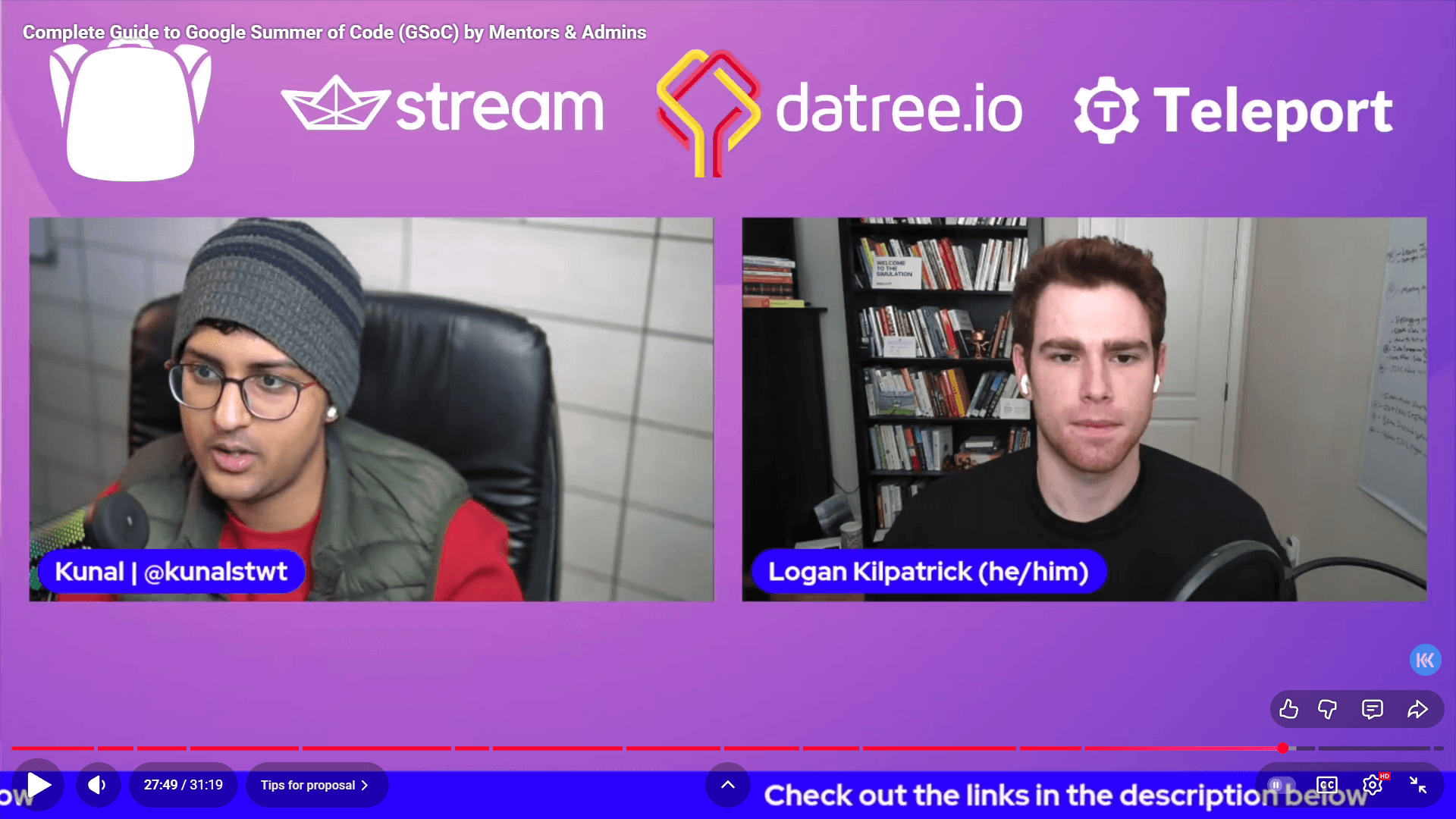
As I continue exploring the world of open source and tech, I watched another helpful video, this time a discussion between Kunal Kushwaha and Logan Kilpatrick. I have been trying to understand open source more clearly, and this conversation gave me exactly the clarity I needed. They talked about GSoC (Google Summer of Code), how it works, and why it is such a great opportunity for learners and contributors. It felt like listening to two people sharing genuine insights from their own experience because Kunal cracked GSoC three times and Logan has mentored in GSOC.
Key Learnings
1. What is Open Source?
Open source simply means companies publicly share their code on GitHub. Anyone from anywhere in the world can look at the code and contribute to it. One point that really stayed with me is how contributions build your proof of work on GitHub. Everything you do stays on your profile, showing your journey and skills.
2. What is GSoC?
GSoC is a platform where organisations, mentors and students work together. It is not just a program, but a place where beginners get guidance while contributing to real projects. This explanation made GSoC feel more accessible and welcoming.
3. GSoC Timeline
I learned that the GSoC timeline can change each year. Because of this, it is important to keep checking the official website for updated dates and announcements.
4. Tips to Start Contributing
They shared some very practical tips that made the process feel less overwhelming:
Check if your chosen organisation is participating in GSoC.
Explore their projects and documentation.
Go through the codebase to understand how things work.
Start with good first issues and then move on to more complex issues.
This advice felt simple and realistic, especially for someone just starting.
5. Importance of Collaboration
One thing they highlighted strongly is that GSoC is not a competition. It is a collaborative environment where developers from different parts of the world work together. This idea of learning and contributing as a team is one of the core values of open source.
6. Tips for Proposal
If you have even a few contributions to open source, it already gives you a big advantage.
Your proposal should clearly explain why you are interested in that particular project and why you believe you are a good fit for the organisation.
7. If You Don’t Get Selected
GSoC has limited slots, so not everyone gets selected. But your contributions still stay on your GitHub profile. And if you keep contributing until next year, your chances of getting selected increase a lot. This part was very encouraging and reminded me that the effort itself is valuable.
My Reflection
After watching the video, I felt like I had a clear understanding of the entire GSoC process. I understood what open source really means, why the timeline matters and how contributions can help build a strong profile. The biggest takeaway for me was that collaboration is more important than competition. Even if I don’t get selected, the contributions I make will remain on my GitHub profile and continue to represent my work.
Final Thoughts
This conversation between Kunal Kushwaha and Logan Kilpatrick helped me see GSoC as more than just a program. It is a journey of learning, contributing and collaborating with the community. Watching this video motivated me to explore more, contribute more and continue growing in the open source world.