Interview Tips from Google Recruiter: Insights from Kunal Kushwaha’s Conversation with Magali Malkin
Introduction
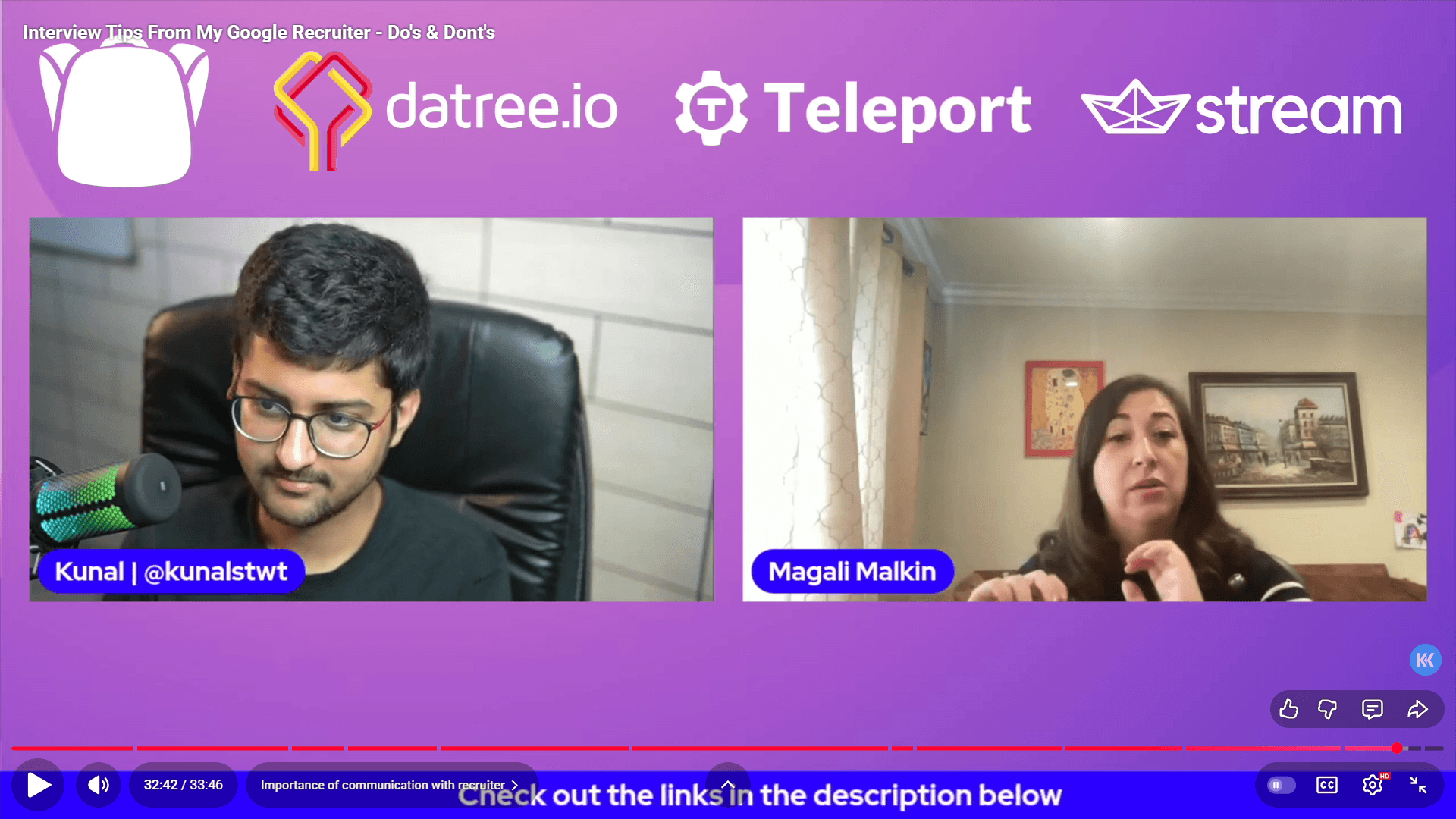
I recently watched a YouTube video of Kunal Kushwaha talking with Magali Malkin, a recruiter from Google. This conversation changed how I view the interview and hiring process.
Before this, I thought getting shortlisted for a job depended only on having a great resume or on sharing success stories during interviews. However, I learned that many factors matter, from resume formatting and timing of applications to communication during the hiring process and handling interview failures.
Key Learnings
1. How Resumes Get Shortlisted
The resume must be well-formatted and include the skills listed in the job description.
Apply early to increase your chances of being noticed.
Avoid using too many infographics. Choose a simple format that highlights your relevant skills, making it easier for recruiters to focus on what’s important.
2. What Happens After the Resume Is Shortlisted
Once a resume is shortlisted, a long process usually follows. This typically includes a DSA round, a technical round, and an HR round.
Keep in touch with the recruiter and show genuine interest in the role. This reflects professionalism and enthusiasm.
3. How to Frame Answers: The STAR Format
Use the STAR format to structure your interview answers:
S (Situation): Clearly explain the situation.
T (Task): Describe the task or challenge you had.
A (Action): Explain the action you took.
R (Result): Share the result.
It's okay if the result is not positive. What matters is explaining what you learned from the experience.
4. Importance of Referrals and Networking
Networking is powerful. Building relationships in the industry can help you get referrals.
Referred candidates often receive more attention, and their process tends to be quicker. Connect with professionals, build genuine relationships, and don’t hesitate to ask for referrals.
5. Setting Priorities Instead of Aiming for One Company
Don’t focus on just one company. Instead, determine what matters most to you in a workplace, such as culture, learning opportunities, or job type.
This focus helps you find the right fit instead of just chasing a big name.
Remember, fear of failure and rejection are part of the process. Each rejection teaches you something new and helps you grow.
My Reflection
I realised I had some misconceptions about interviews. I thought I should only share success stories, but now I know it’s okay to discuss failures as long as I explain what I learned. I also used to have a dream company in mind, but now I want to focus on what I want from a company and find one that aligns with my goals.
Final Thoughts
The conversation between Kunal Kushwaha and Magali Malkin taught me more than just interview tips. It helped me see the process differently. A good resume doesn’t need to be fancy; it should be clear and relevant. Interview answers don’t always need a positive ending; honesty and learning are more important. Networking is about creating real connections, not just asking for favours. And remember, rejections aren’t failures; they’re lessons that prepare you for the next opportunity.
I will apply these lessons as I move forward, staying genuine, curious, and open to learning from every experience.
If this story resonates with you, share it with others preparing for interviews. A good conversation can change how we view our career journey.